
You know that moment when a student stares at a word problem, pencil in hand, and says, “I have no idea where to start?”
That's where strong problem-solving instruction can make all the difference. Instead of jumping in with the answer, you help students slow down, make sense of the problem, try a strategy, and talk through their thinking.
The payoff? Students who gain confidence every time they work through a challenge on their own. They don't just learn how to solve one problem. They build the skills and mindset to tackle the next one, too. That’s effective math problem solving.
What Is Math Problem Solving in Elementary School?
Math problem solving is the process of using mathematical knowledge, reasoning, and strategies to solve unfamiliar or complex situations. Rather than simply following a memorized procedure, students analyze information, make decisions, test ideas, and justify their thinking. In the elementary grades, this is the foundation for a much bigger progression — see the full K–12 guide to math problem solving for how these skills grow through high school.
Effective problem solving helps students:
- Understand mathematical situations
- Identify important information
- Choose appropriate strategies
- Test and refine solutions
- Explain their reasoning
- Determine whether an answer makes sense
Through regular problem-solving experiences, students develop deeper mathematical understanding and become more confident learners.
- Math problem solving teaches students how to think, not just calculate.
- Students develop stronger reasoning when they explore multiple strategies.
- Productive struggle turns “I can’t” into “I can figure this out.”
- Visual models help students see and understand math more deeply.
- Classroom discussion strengthens both communication and mathematical reasoning.
- Real-world problems make mathematics more engaging and relevant.
- Problem solving deserves a regular spot in daily instruction.
- Conceptual understanding creates stronger, longer-lasting math success than memorization alone.
How Do You Teach Math Problem Solving?
Teaching math problem solving involves more than giving students challenging questions. Students need explicit instruction, opportunities to explore multiple strategies, and time to discuss their thinking.
A simple framework includes:
- Understand the problem.
- Identify important information.
- Choose a strategy.
- Solve the problem.
- Explain the reasoning.
- Check whether the solution makes sense.
While students may not always move through these steps in a strict order, this process helps them approach unfamiliar problems with greater confidence and independence.

Key Components of Effective Math Problem Solving
Conceptual Understanding Matters More Than Memorization
Many students learn math procedures without understanding why they work. They may perform well temporarily but struggle when problems become more complex.
Conceptual understanding helps students:
- Transfer knowledge to new situations
- Recognize patterns
- Solve unfamiliar problems
- Explain mathematical reasoning
According to the National Council of Teachers of Mathematics (NCTM), students who regularly engage in mathematical reasoning and problem solving develop deeper understanding and greater ability to apply math concepts in unfamiliar situations.
Productive Struggle Supports Long-Term Learning
Students need opportunities to wrestle with challenging problems independently. When adults immediately provide answers or procedures, students lose opportunities to build reasoning skills.
Productive struggle helps students:
- Develop persistence
- Strengthen confidence
- Improve reasoning
- Learn flexibility in thinking
The goal is challenge without frustration or overwhelm.
Multiple Strategies Build Flexible Thinkers
Strong problem solvers understand that there is often more than one way to solve a problem.
For example, students solving 48 + 27 might:
- Break apart numbers
- Use compensation
- Draw a visual model
- Count on
- Use a number line
When students compare strategies, they develop stronger number sense and mathematical flexibility.
Why is Math Problem Solving Important?
Elementary school is where students form lasting beliefs about math. When classrooms focus only on speed and memorization, students begin to think math is about getting answers quickly or avoiding mistakes. That mindset often creates math anxiety, fear of mistakes, low confidence, and shallow understanding.
Problem solving creates a different experience. Students begin to see math as something they can reason through. They learn that confusion is part of learning and that mistakes can support growth.
Problem solving also develops skills beyond mathematics, including:
- Critical thinking
- Communication
- Decision-making
- Persistence
- Flexibility
- Confidence
These skills support learning across subjects and throughout life.
For example:
A student solving 47 + 26 using the standard algorithm is practicing computation.
A student deciding how many seats are needed for 47 students and 26 parents attending an event is solving a problem because they must interpret the situation and apply reasoning.
Both skills matter, but problem solving builds deeper mathematical understanding.
Computation vs. Problem Solving
Many people use the terms interchangeably, but computation and problem solving are not the same thing. One builds quick calculators. The other builds confident thinkers who won’t panic when the numbers get messy.
| Computation | Problem Solving |
| Focuses on procedures | Focuses on reasoning |
| Emphasizes accuracy | Emphasizes understanding |
| Often uses one method | Encourages multiple strategies |
| Solves equations directly | Applies math to situations |
| May rely on memorization | Requires decision-making |
Common Challenges in Elementary Math Problem Solving
Many students struggle with problem solving because they have learned to rely on shortcuts instead of understanding.
Common habits include:
- Searching for keywords
- Memorizing steps without meaning
- Expecting one correct method
- Rushing to answers
- Avoiding unfamiliar problems
Students may also hesitate because they fear making mistakes. When mistakes feel like failure, kids become reluctant to take risks or try new strategies. Problem solving asks students to sit with uncertainty for a bit—which can feel uncomfortable at first. The good news? Teachers and parents can help by normalizing mistakes and shifting the focus to reasoning instead of speed.
Signs a Student Is Struggling With Problem Solving
Students who struggle with math problem solving often:
- Give up quickly
- Ask immediately for help
- Guess without explaining reasoning
- Depend heavily on memorized procedures
- Avoid unfamiliar problems
- Have trouble explaining thinking
- Become anxious during word problems
These aren’t signs a student is “bad at math”—they’re signals they need more opportunities to build flexible thinking muscles.
With the right support, consistent practice, and a classroom culture that values thinking over speed, these challenges turn into powerful growth moments.
What Effective Math Problem Solving Instruction Looks Like
Strong math classrooms sound (and feel) very different from traditional ones that focus mainly on getting the right answer quickly.
Remember that moment when a student looks up from a word problem, pencil hovering, and says, “I don’t even know where to start?” In classrooms with strong problem-solving instruction, that exact moment becomes an opportunity.
Instead of jumping in with the answer or a scripted procedure, you’ll hear students:
- Discussing strategies with each other
- Explaining their reasoning out loud
- Comparing different approaches
- Asking thoughtful questions
- Using drawings, models, and manipulatives
- Revising their thinking when something doesn’t quite work
Teachers guide learning by asking questions such as:
- How did you solve it?
- Why does that strategy work?
- Does anyone have a different approach?
- What might someone else try here?
- How do you know your answer makes sense?
These conversations and visible thinking moves turn confusion into confidence and turn that hesitant “I don’t know where to start” into “Here’s what I’m trying and why.”
Grade-Level Expectations for Problem Solving
Kindergarten Through Grade 1
Students begin solving simple real-world problems using:
- Objects
- Drawings
- Counting strategies
Examples include sharing snacks equally or comparing quantities.
Grades 2 Through 3
Students begin:
- Solving multi-step problems
- Explaining reasoning
- Using visual models
- Comparing strategies
Word problems become more complex and require stronger reasoning.
Grades 4 Through 5
Students solve:
- Multi-step problems
- Fraction problems
- Multiplication and division scenarios
- Problems involving comparison and justification
Students should explain not only what they did, but why it works.

How to Teach Math Problem Solving in Elementary School
Use Open-Ended Problems
Open-ended tasks encourage creativity and deeper reasoning.
Instead of asking for one answer, teachers can ask:
- How many ways can you solve this?
- Which strategy is most efficient?
- Can you prove your thinking?
Model Thinking With Think-Alouds
Teachers should model reasoning aloud during instruction.
For example:
“I’m not sure which strategy to use yet. I notice these numbers are close together, so compensation might help.”
This shows students that mathematical thinking is an active process.
Encourage Reflection
After solving problems, students should reflect on their thinking.
Questions might include:
- What worked?
- What was difficult?
- Would you solve it differently next time?
Reflection strengthens metacognition and helps students become more independent thinkers.
Connect Math to Real Life
Students engage more deeply when math feels meaningful.
Real-world contexts may include:
- Shopping
- Cooking
- Sports statistics
- Classroom supplies
- Time and scheduling
Real-world problem solving helps students see purpose in mathematics.
How Parents Can Support Problem Solving at Home
Parents do not need advanced math knowledge to support their child. Some of the most effective support comes from encouraging curiosity, confidence, and problem-solving habits at home.
One of the best things parents can do is ask students to explain their reasoning when solving a problem. Instead of focusing only on whether an answer is correct, parents can ask questions like, “How did you figure that out?” or “Why does that strategy work?” These conversations help students strengthen their understanding and develop the ability to think critically about mathematics.
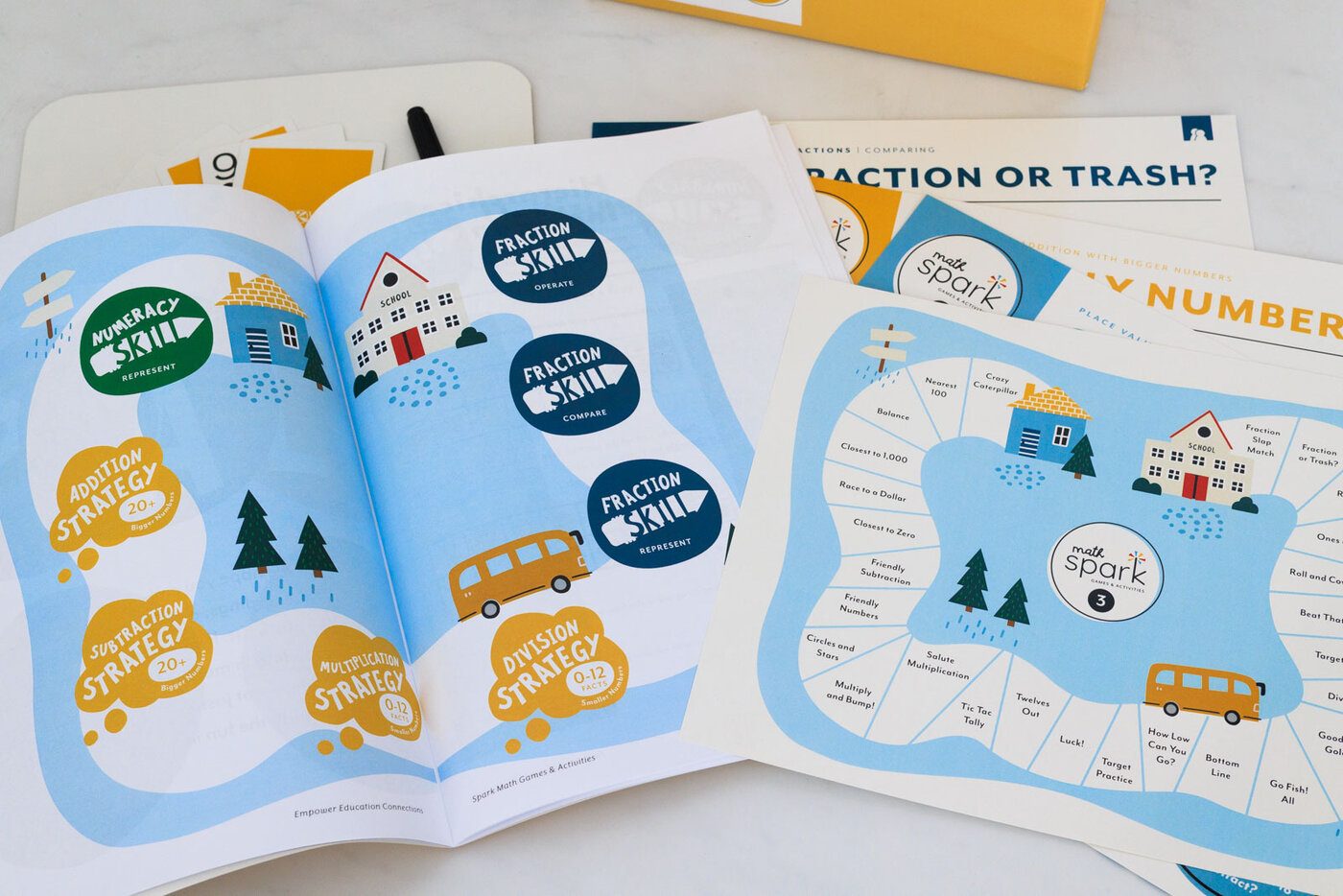
Playing number games is another way to build math skills in a low-pressure environment. Card games, board games, puzzles, and everyday activities involving numbers help students practice mental math, recognize patterns, and become more comfortable working with numbers.
Parents can also encourage estimation in everyday situations. Asking students to estimate the total cost while shopping, the amount of time needed for an activity, or how many objects fit into a container helps build number sense and flexible thinking. Estimation teaches students to think reasonably about numbers instead of relying only on exact calculations.
It is also important to allow productive struggle. When students immediately receive help at the first sign of difficulty, they can become dependent on others to solve problems for them. Giving students time to think, try different strategies, and work through challenges helps build perseverance and confidence.
Finally, parents should avoid rushing to provide answers. While it may feel helpful to step in quickly, students benefit more when they are guided to think through problems independently. Offering encouragement, asking questions, and creating space for exploration helps students become more confident and capable mathematical thinkers over time.
Final Thoughts
Math problem solving in elementary school is about helping students become thinkers who believe they can figure things out.
When classrooms make reasoning, flexibility, discussion, and productive struggle part of everyday learning, students walk away with far more than math skills. They gain the confidence to tackle unfamiliar challenges, the habits to persist through uncertainty, and the ability to think mathematically in every part of their lives.
That’s the kind of lasting power we want for every elementary student: turning “I don’t know” into “Let me try this…” one thoughtful problem at a time.
Frequently Asked Questions
Effective instruction combines open-ended tasks, visual models, classroom discussion, and opportunities for productive struggle. Students should regularly explain their reasoning and compare multiple strategies rather than simply practice procedures.
Students may draw diagrams, use manipulatives, create tables, break apart numbers, estimate, use number lines, or act out situations. Different strategies help students develop flexibility and deeper understanding.
Many students rely on keywords or memorized procedures rather than understanding the mathematical situation. Difficulties with reading comprehension, conceptual understanding, and confidence can also contribute to challenges.
Productive struggle occurs when students work through challenging problems independently before receiving support. This process builds perseverance, reasoning skills, and confidence while strengthening learning.
Computation focuses on performing calculations accurately. Problem solving requires students to interpret situations, select strategies, justify reasoning, and apply mathematical concepts in meaningful contexts.