
What Does It Mean to Teach Fractions for Real Understanding?
Teaching fractions for real understanding means helping students understand what fractions represent, how they relate to quantity and size, and how to use them in meaningful contexts. Effective fraction instruction uses visual models, reasoning, and discussion rather than memorization alone.
Learning fractions is not just about memorizing procedures. Students need to understand how fractions relate to size, quantity, comparison, and reasoning. When fraction instruction focuses on visual models, mathematical discussion, and real-world meaning, students develop deeper understanding and stronger problem-solving skills.
Fractions are not only one of the most important concepts in elementary math, but they are also one of the most misunderstood. Many students can follow steps or shade models without really understanding what fractions represent. That gap shows up later when they try to compare fractions, solve problems, or apply what they have learned in new situations.
Why Fractions are Important for Students
If students do not understand fractions as numbers, they struggle later with operations, algebraic thinking, and proportional reasoning. The goal is not just to help students get correct answers. It is to help them explain their thinking, compare quantities, reason mathematically, and apply their understanding in meaningful ways.
The most effective fraction instruction moves from concrete experiences to visual models and then to abstract reasoning. This is often called the Concrete-Pictorial-Abstract (CPA) approach. When teaching follows that progression, students build conceptual understanding, procedural fluency, and confidence at the same time.
- Fractions should be taught conceptually before procedures
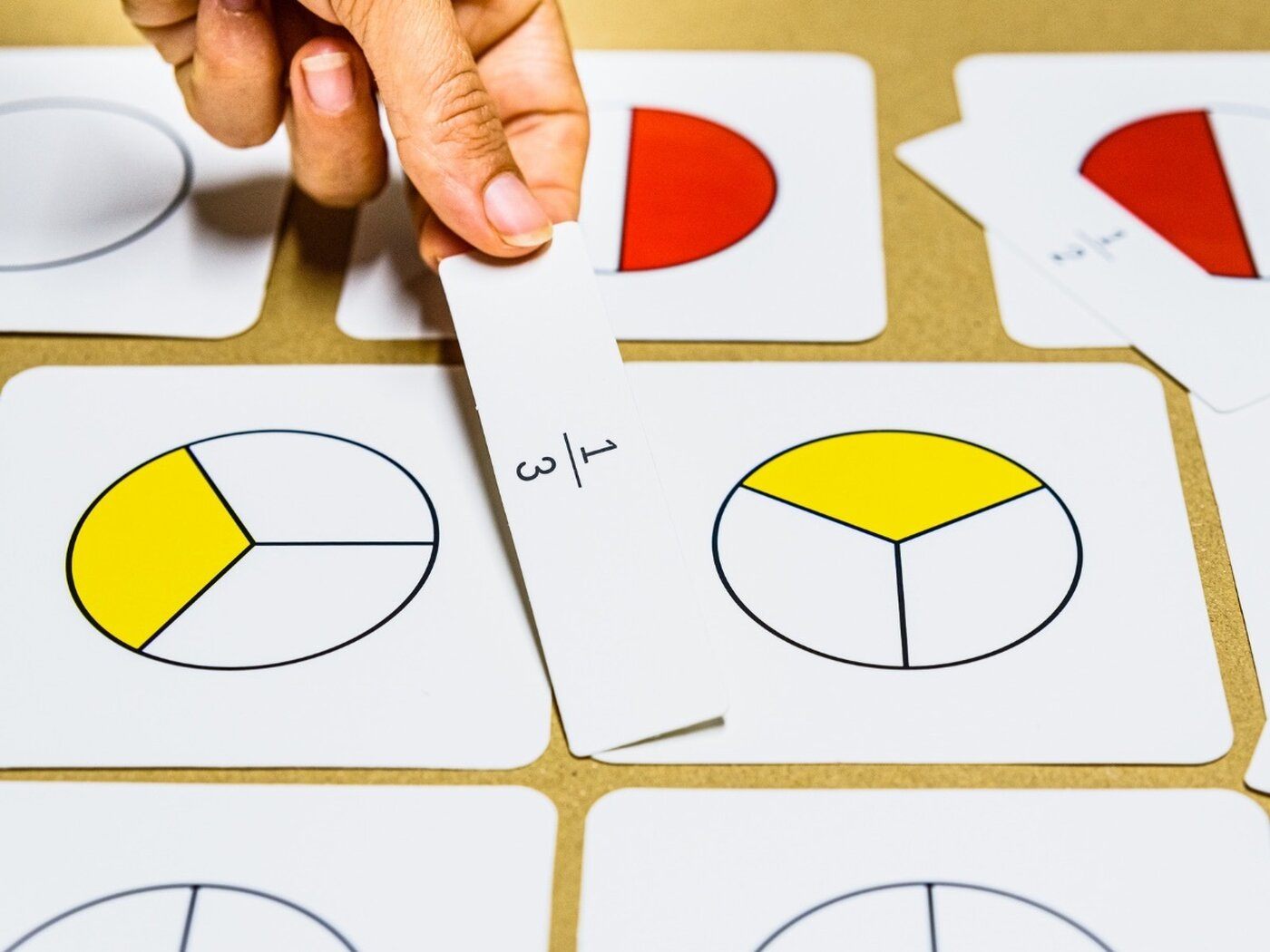
- Hands-on and visual models help students build understanding
- Benchmark fractions improve comparison and estimation skills
- Math discussions deepen reasoning and communication
- Students learn fractions best through multiple representations
- Strong fraction instruction develops long-term number sense
What is the best way to teach fractions?
The best way to teach fractions is to start with equal parts and hands-on models, then build vocabulary in context, introduce comparison using number lines and benchmark fractions, and finally move into problem-solving and real-world application.
A strong progression includes:
- Starting with equal parts and hands-on models
- Building vocabulary in context
- Using number lines and benchmark fractions for comparison
- Connecting visual models to equations
- Encouraging mathematical discussion and reasoning
- Moving into problem-solving and real-world application
This progression helps students make sense of fractions instead of memorizing disconnected rules.
Why Fractions Are Difficult for Students
Fractions are difficult for many students because they are often introduced as procedures instead of ideas. A student may learn how to shade part of a shape or follow a rule for comparing fractions, but still not understand what the numerator and denominator actually mean or why equal parts matter.
Fractions also require a different kind of thinking. Whole numbers behave in predictable ways, but fractions are about relationships between parts and wholes. Students need to understand that the same fraction can look different depending on the model and that comparisons only make sense when the whole is the same.
Without that foundation, students end up relying on memorization. And memorization without understanding breaks down quickly.
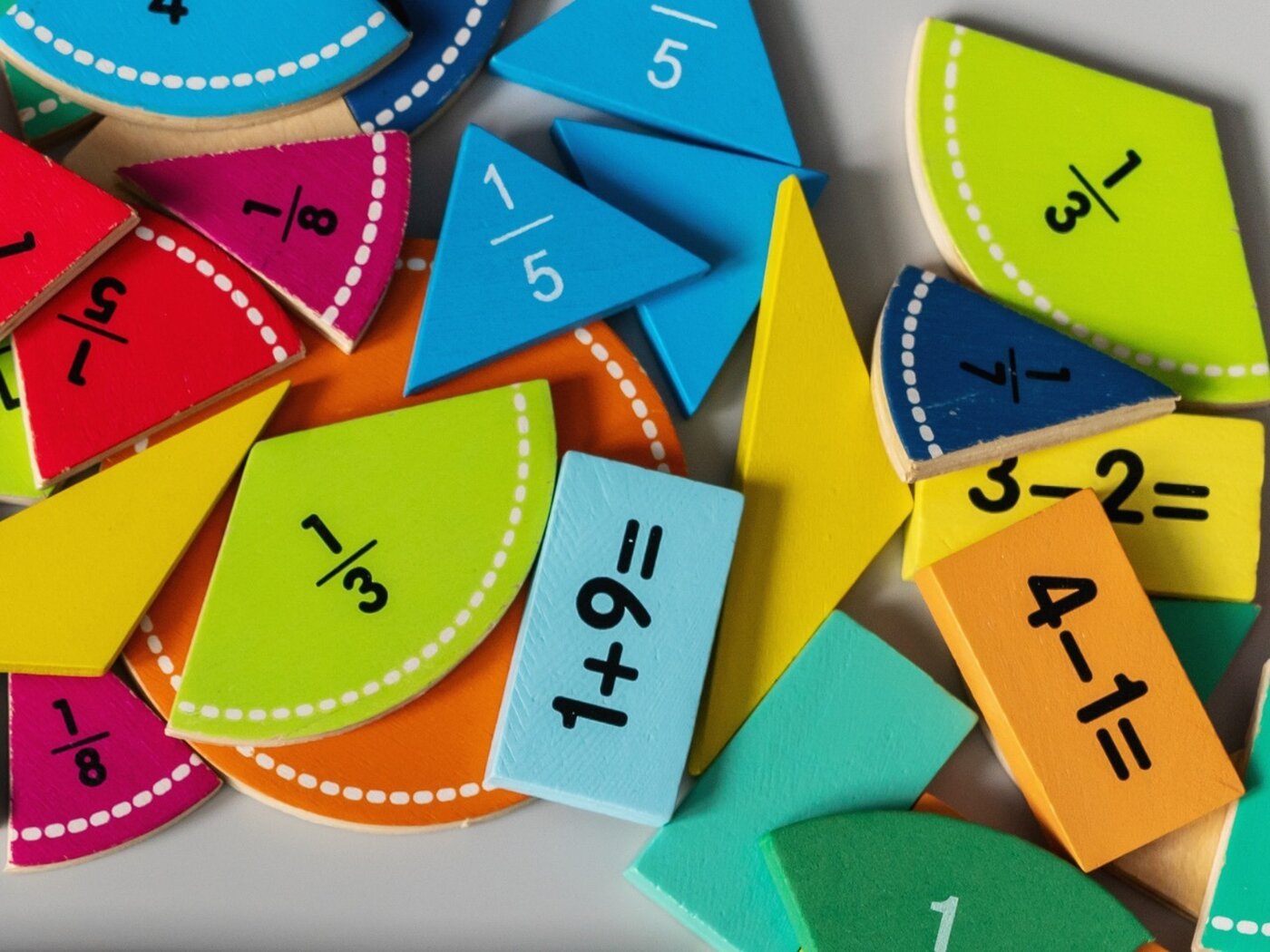
Common Fraction Misconceptions Teachers Should Watch For
Students often develop misconceptions about fractions when instruction focuses too heavily on procedures instead of reasoning.
Common misconceptions include:
- Thinking larger denominators mean larger fractions
- Believing 1/8 is greater than 1/4 because 8 is larger than 4
- Comparing fractions without considering the whole
- Viewing the numerator and denominator as separate whole numbers
- Assuming fractions only exist as parts of shapes
- Memorizing cross multiplication without understanding quantity
For example, a student might say:
“1/8 is bigger because 8 is bigger than 4.”
This response shows the student is thinking about whole numbers instead of relationships between quantities.
Another student might say:
“These fractions are equal because the pieces look the same.”
This can reveal that the student is not yet considering the size of the whole.
Listening closely to student reasoning helps teachers identify misunderstandings before they become long-term learning gaps.
Procedural vs. Conceptual Fraction Instruction
| Procedural Instruction | Conceptual Instruction |
| Memorizing rules | Understanding relationships |
| Following steps | Explaining reasoning |
| Isolated practice | Multiple representations |
| Focus on correct answers | Focus on mathematical thinking |
| Shortcut strategies first | Visual understanding first |
| Worksheets only | Discussion and reasoning |
What Makes Fraction Instruction Effective?
Effective fraction instruction follows a clear developmental progression.
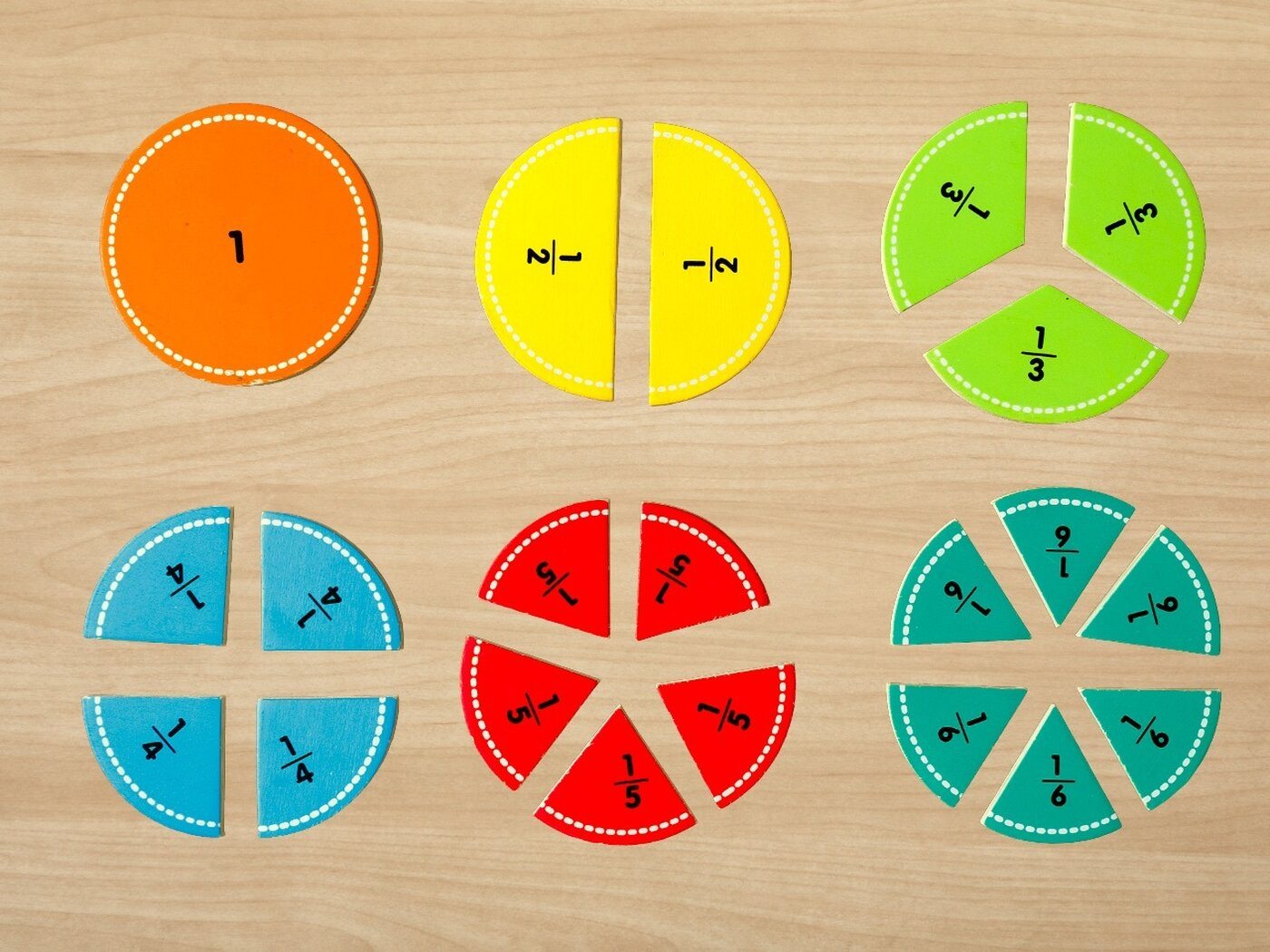
Students begin by exploring fractions in concrete and visual ways. They divide shapes, share objects, and build meaning through hands-on experiences. From there, they develop language by learning terms like numerator, denominator, and unit fraction in context rather than in isolation.
As their understanding grows, students compare fractions using number lines, fraction bars, area models, and benchmark fractions such as one-half. These tools help students reason about size instead of relying on memorized tricks.
Finally, students apply their understanding by solving word problems, explaining their thinking, and connecting visual models to equations.
This progression helps students move from simply seeing fractions to actually reasoning about them.
Fraction Skills by Grade Level
| Grade Level | Fraction Focus |
| Kindergarten-1st Grade | Equal sharing, partitioning shapes, parts of a whole |
| 2nd Grade | Unit fractions and simple fraction language |
| 3rd Grade | Fractions on number lines and equivalent fractions |
| 4th Grade | Comparing fractions and reasoning with benchmark fractions |
| 5th Grade | Fraction operations and conceptual problem-solving |
This progression helps students build understanding gradually instead of rushing into procedures before they are ready.
Fraction Instruction Progression
| Stage | What Students Are Learning | What It Looks Like in the Classroom | Teacher Moves That Work |
| Build Understanding | Fractions represent equal parts of a whole | Students fold paper, divide shapes, share objects | Use hands-on models, real-world examples, and drawing tasks |
| Develop Language | Meaning of numerator, denominator, and unit fractions | Students label models and explain parts of a whole | Teach vocabulary in context, connect words to visuals |
| Compare Fractions | How to determine greater than, less than, or equal | Students use number lines and fraction bars to compare | Use benchmark fractions like 1/2 and visual reasoning |
| Apply Learning | How fractions work in real situations | Students solve word problems and explain their thinking | Use models, equations, estimation, and discussion |
Key Concepts Students Need Before Fraction Mastery
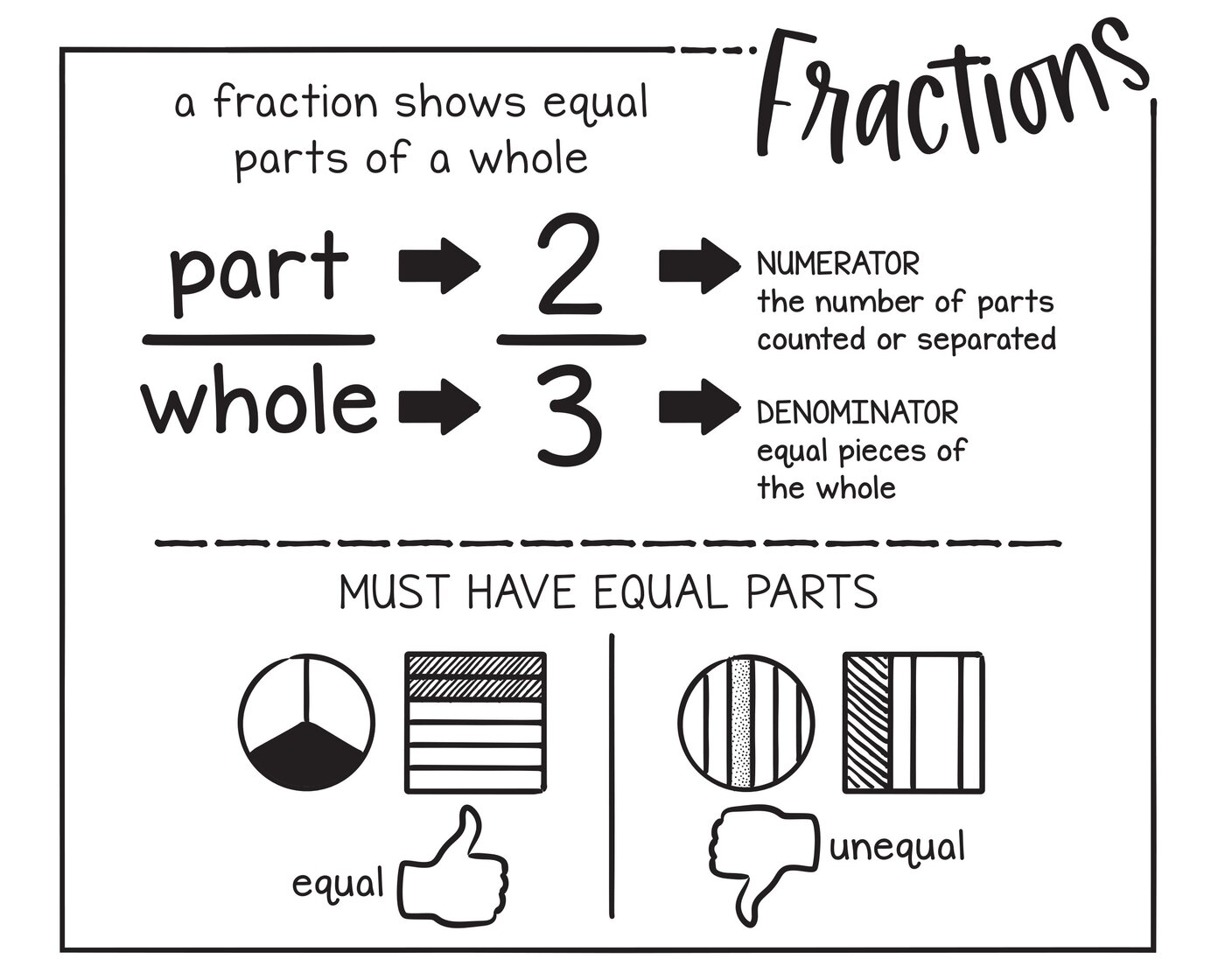
Before students can succeed with fractions, they need a strong foundation:
- Equal parts: Fractions represent equal parts of a whole
- Whole: Students must understand what the “whole” is
- Unit fractions: Fractions like 1/2, 1/3, and 1/4 build meaning
- Numerator and denominator: These must be connected to meaning, not memorized
- Visual models: Number lines, fraction bars, and drawings support understanding
- Benchmark fractions: Fractions like 1/2 help with estimation and comparison
- Mathematical reasoning: Students explain why one fraction is greater or less
- Reasonableness: Students check if answers make sense
Think of this as a checklist. If these pieces are missing, everything else becomes harder.
Best Strategies for Teaching Fractions
1. Start with hands-on and visual models
Students need to see and build fractions before they can reason about them.
Use:
- Paper folding
- Sharing objects
- Drawing partitioned shapes
This connects fraction language to something concrete.
2. Build purposeful math talk
Students should explain their thinking regularly.
Use:
- Sentence frames
- Partner discussions
- Whole-class conversations
When students explain why two fractions are equal or how they know one is greater, they deepen both understanding and language.
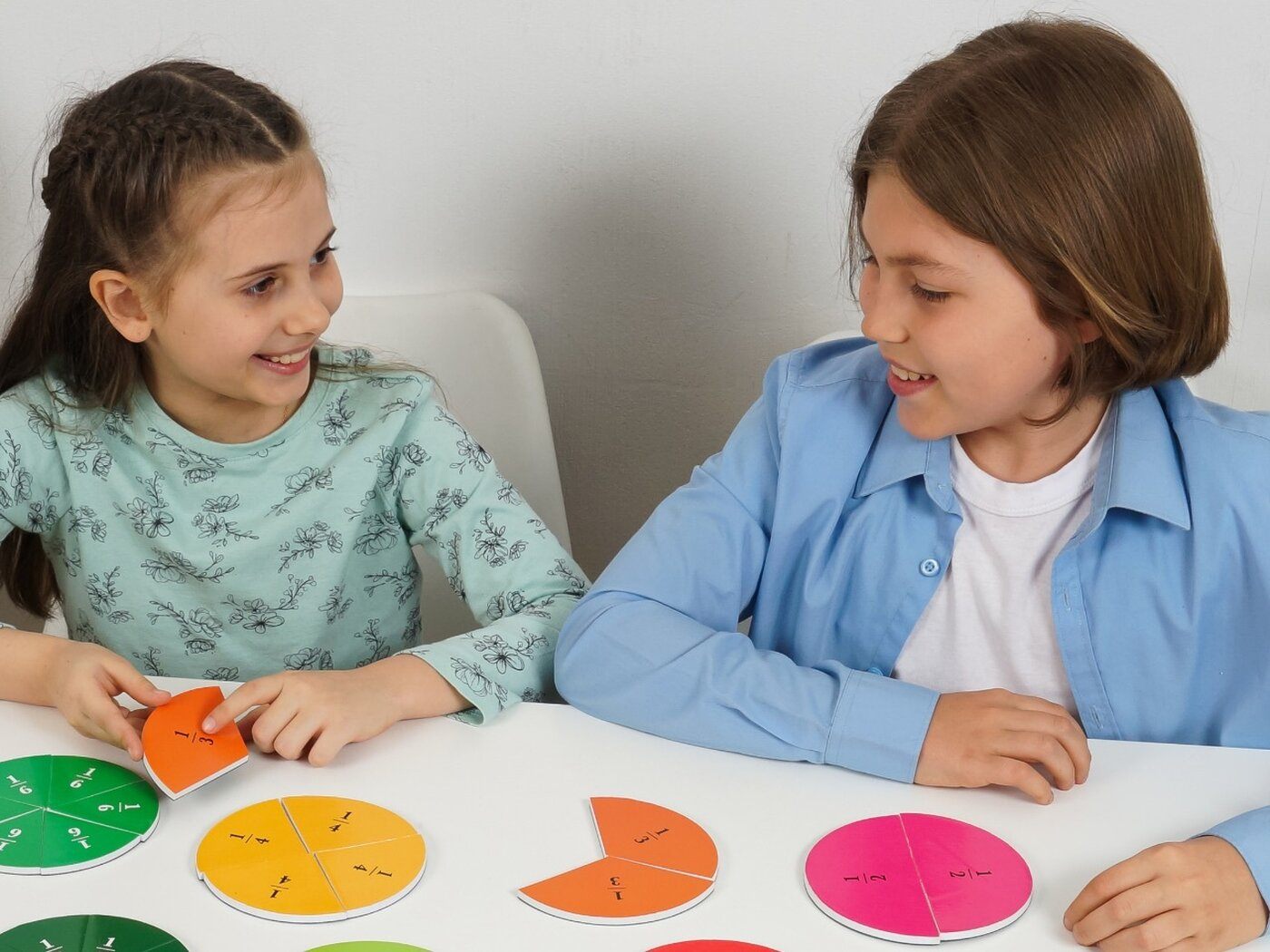
3. Use multiple representations
Students don’t all understand fractions the same way.
Show fractions through:
- Number lines
- Area models
- Fraction bars
- Equations
Seeing the same idea in different ways builds flexibility and deeper understanding.
4. Use consistent problem-solving routines
Students need a clear process when solving problems.
Teach them to:
- Identify what they know
- Decide what they need to find
- Choose a strategy
- Check if the answer makes sense
Routines build independence and confidence over time.
What Makes Fraction Instruction Less Effective?
Fraction instruction becomes less effective when students are expected to memorize procedures before understanding concepts.
Avoid:
- Teaching rules before visual understanding
- Relying only on worksheets
- Introducing vocabulary without context
- Rushing into fraction operations too early
- Using only one representation
- Focusing only on correct answers instead of reasoning
Students need opportunities to reason, discuss, model, and connect ideas before procedures truly make sense.
A Simple Classroom Routine You Can Use Tomorrow
Try this progression:
- Have students divide shapes into equal parts
- Identify the unit fraction for each part
- Introduce vocabulary in context
- Use fraction bars and number lines
- Compare fractions using benchmarks like 1/2
- Move into word problems with models and equations
This works because students experience fractions in multiple ways before being asked to apply them.
Why Conceptual Fraction Instruction Improves Learning
Conceptual fraction instruction improves learning because it prioritizes reasoning over memorization.
Instead of treating fractions as isolated procedures, students learn to see them as numbers, relationships, and tools for solving problems. They begin recognizing patterns, making connections, estimating reasonably, and explaining their thinking.
This approach also strengthens:
- number sense
- procedural fluency
- mathematical discourse
- strategic thinking
- confidence in problem-solving
Students are not just following steps. They are making sense of mathematics.
That shift is what leads to long-term success.
Final Thoughts
Teaching fractions is about helping students make sense of math, not just memorize steps. Through visuals, conversations, practice, and reasoning, students begin to see how fractions work and why they matter. When understanding comes first, students build the confidence to solve problems, share their thinking, and feel successful in math.
Frequently Asked Questions
Fractions are difficult because they require students to think about relationships between parts and wholes rather than just working with whole numbers. When students are taught procedures before they understand these relationships, confusion builds quickly and often sticks.
The best way to introduce fractions is through hands-on experiences like paper folding or sharing objects. These activities help students connect fraction language to real meaning before moving into symbols or equations.
Visual models help students connect fraction symbols to actual quantities and relationships. Tools like number lines and fraction bars make abstract ideas more concrete and easier to compare.
Students compare fractions more effectively when they use visual tools like number lines and fraction bars. Benchmark fractions such as one-half also give students a helpful reference point for reasoning about size.
Benchmark fractions like 1/2, 1/4, and 3/4 help students estimate and compare fractions more efficiently. They give students familiar reference points that improve number sense and reasoning.
Before working with fraction operations, students need to understand equal parts, unit fractions, and the meaning of numerator and denominator. Without this foundation, operations often become procedural and difficult to retain.
Procedures are important, but memorization without understanding often leads to confusion later. Students need conceptual experiences first so procedures actually make sense.