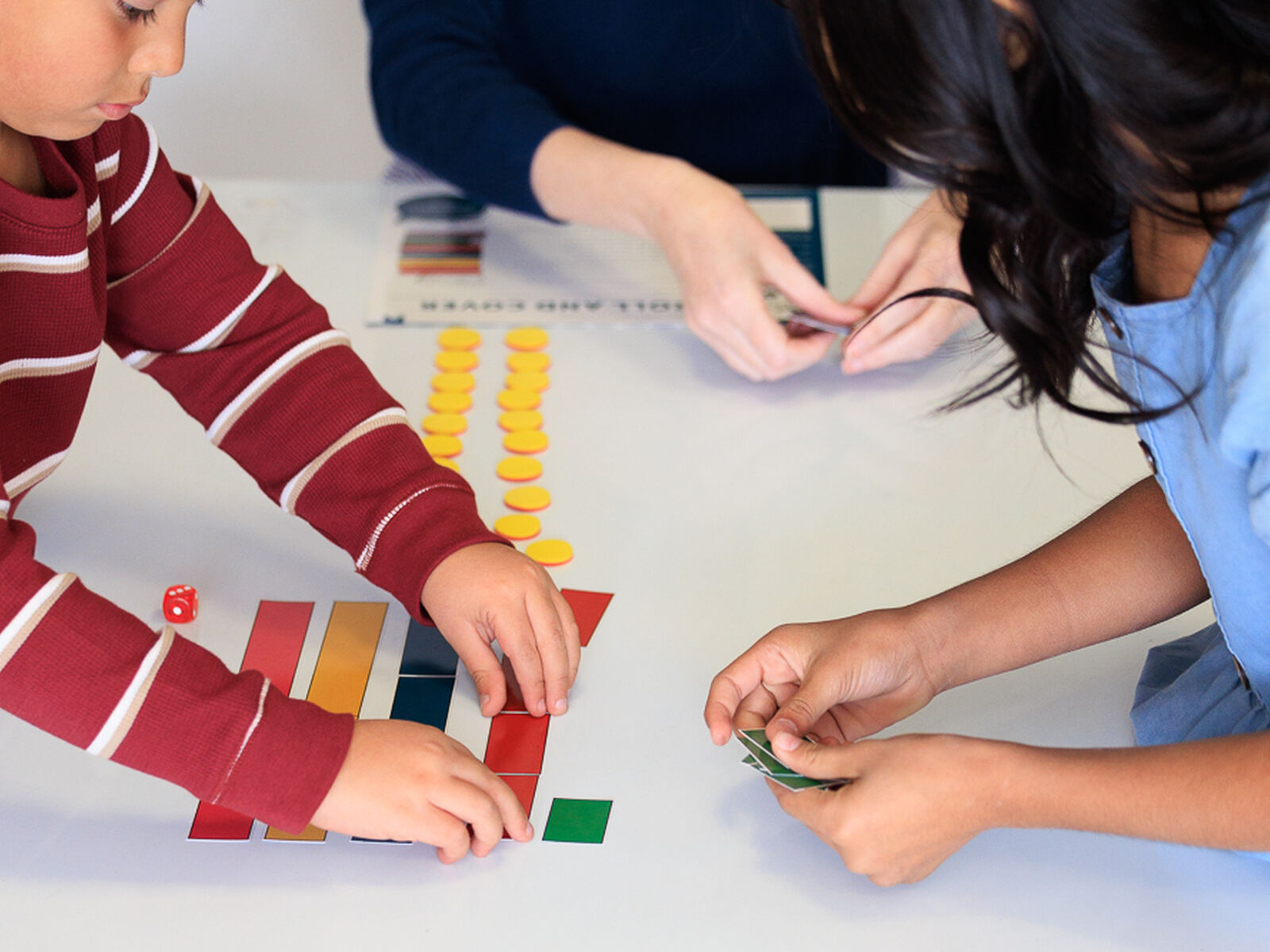
What Are Math Activities?
Math activities are structured learning experiences that help students build mathematical understanding through:
- Problem solving
- Games
- Mathematical discussions
- Hands-on exploration
- Visual models
- Real-world applications
Effective math activities help students develop fluency, confidence, reasoning skills, and flexible thinking. Unlike repetitive worksheets alone, meaningful math activities encourage students to explain their thinking, compare strategies, and apply concepts in new situations. They help students develop fluency, confidence, and flexible thinking all at the same time.
- Effective math activities build understanding, fluency, and confidence simultaneously.
- Math fluency means accuracy, efficiency, and flexibility, not speed alone.
- Students develop stronger mathematical reasoning when they explain and compare strategies.
- Hands-on and discussion-based activities benefit learners at every grade level.
- Purposeful math activities help students connect concepts instead of memorizing procedures.
- Consistent use of meaningful math activities supports long-term achievement and positive math identities.
- The strongest activities can be adapted for intervention, enrichment, centers, and whole-group instruction.
Why are Math Activities Important for Student Learning?
Math learning is strongest when students have repeated opportunities to think, talk, model, and practice. That is why high-quality math activities matter so much. They create space for students to build conceptual understanding, apply strategies, and develop comfort with numbers over time.
Too often, math practice is treated as simple repetition. But effective math activities help students connect ideas, notice patterns, and make decisions. Instead of memorizing steps without understanding, students learn how math works and why certain strategies make sense.
This is important at every grade level. Young students need activities that build early numeracy, counting, subitizing, and part-whole thinking. Elementary students need practice with operations, fractions, multiplication, division, and flexible computation. Older students need math experiences that strengthen reasoning, representation, and confidence as concepts become more abstract.
How Math Activities Build Fluency and Flexible Thinking
Math fluency is often misunderstood. It does not simply mean answering problems quickly. The National Research Council and many mathematics organizations define fluency as a combination of efficiency, accuracy, and flexibility.
Real fluency means students can solve accurately, choose efficient strategies, and adjust their thinking based on the task. A fluent student understands that different problems may call for different approaches. Sometimes mental math is best. Sometimes a visual model is helpful. Sometimes a written strategy is the clearest path. Flexible thinkers do not rely on one method for every situation. They understand enough about numbers and operations to select what works best.
That kind of fluency develops through meaningful math activities rather than pressure alone. When students play games, compare strategies, talk through solutions, and use models or manipulatives, they build a stronger foundation for long-term learning.
What Makes a Math Activity Effective?
Not all math activities are created equal. Some keep students busy, while others help students develop the skills, understanding, and confidence they need to become successful mathematicians.
Purposeful
Strong math activities are designed with a clear learning goal. Students may be practicing a skill, developing conceptual understanding, strengthening problem-solving abilities, or applying mathematical reasoning.
Engaging
True engagement happens when students are actively thinking. Effective activities require students to make decisions, test ideas, solve problems, discuss strategies, and respond to challenges.
Examples include:
- Games that require strategic thinking
- Real-world applications
- Collaborative problem solving
- Visual models and manipulatives
- Open-ended questions with multiple solution paths
Designed for All Learners
Every classroom includes students with different strengths and levels of readiness. Effective activities provide an entry point for all learners while still offering opportunities for deeper thinking.
Teachers often support accessibility by:
- Using visual supports and manipulatives
- Offering multiple solution methods
- Providing scaffolded questions
- Including optional challenge tasks
Flexible
High-quality math activities can be used during whole-group instruction, small-group practice, intervention, centers, or independent work. Flexible activities make differentiation easier and help teachers maximize instructional time.
Encourage Mathematical Discussion
Some of the most powerful learning happens when students talk about math. Effective activities encourage students to explain their thinking, justify answers, compare strategies, and ask questions.
Signs a Math Activity Is High Quality
Before selecting a math activity, ask:
- Does it support a clear mathematical goal?
- Does it encourage reasoning?
- Can students use multiple strategies?
- Does it promote discussion?
- Can all learners access the task?
Activities that meet these criteria are more likely to improve understanding, fluency, and confidence over time.
The Math Activity Progression Framework
The strongest math activities do more than provide practice. They create opportunities for students to connect understanding to fluency.
A simple framework is:
Activity → Discussion → Reflection → Fluency Transfer
For example:
- Students play a math game.
- Students explain and compare strategies.
- Students reflect on what worked and why.
- Students apply the strategy independently in future problems.
This progression helps students move beyond memorization and develop lasting mathematical understanding.
Math Activities by Grade Band
K–2 Math Activities
In the primary grades, classroom math games should focus on building strong number sense and helping students make sense of quantities. Students begin to understand counting, comparing, composing and decomposing numbers, and basic addition and subtraction.
Helpful math activities include:
- Counting games
- Subitizing routines
- Part-whole mats
- Roll and solve games
- Math centers with manipulatives
At this grade level, activities should feel playful while still being intentional. The goal is to build confidence with numbers and encourage students to begin using simple strategies naturally.
Crossout Game
Crossout is a simple counting game that helps students practice recognizing numerals 1 through 6. This game is for two players.
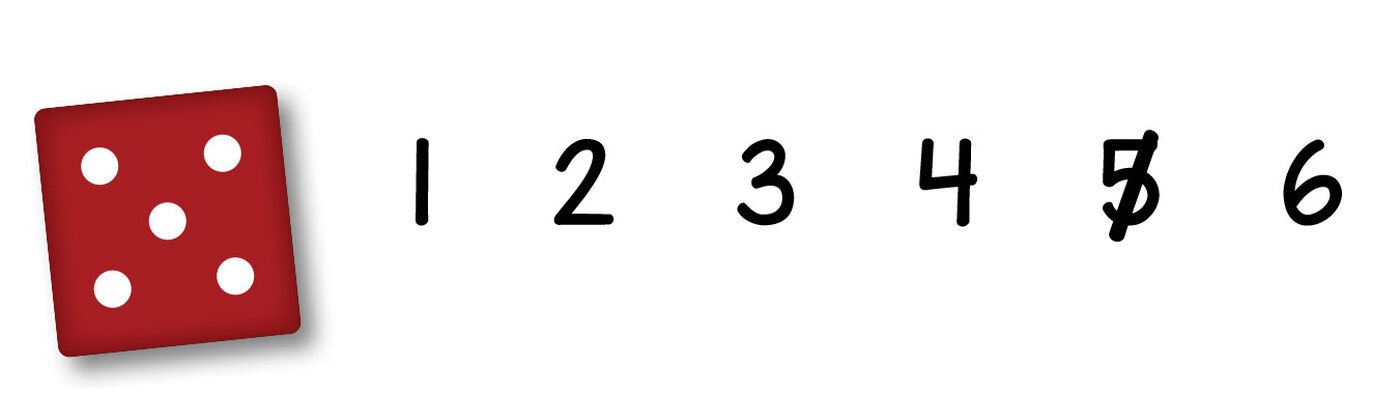
Materials
- Math Journal and pencil or whiteboard and dry erase marker
- 1 die or number cube
Directions
- Before play, each player writes the numbers 1 through 6.
- Decide who will go first, then take turns.
- On your turn, roll the die and count the dots.
- Find that number and cross it off (or erase it)
- Continue to take turns.
- The first player to cross off or erase all of their numbers is the winner!
Grades 3–5 Math Activities
Upper elementary students benefit from activities that move from foundational skills into more complex operations and reasoning. This is often where students deepen work with multiplication, division, fractions, decimals, place value, and problem solving.
Effective activities include:
- Multiplication and division games
- Fraction activities
- Decimal practice routines
- Target number challenges
- Math discussion tasks
This grade band is an important time to help students move beyond memorization and toward flexible use of strategies. Many students can perform procedures but still need support understanding why those procedures work.
Butterfly Game
Butterfly is designed to help students practice adding three addends and finding the same sum in more than one way using a deck of cards. This game is for 2 or more players.
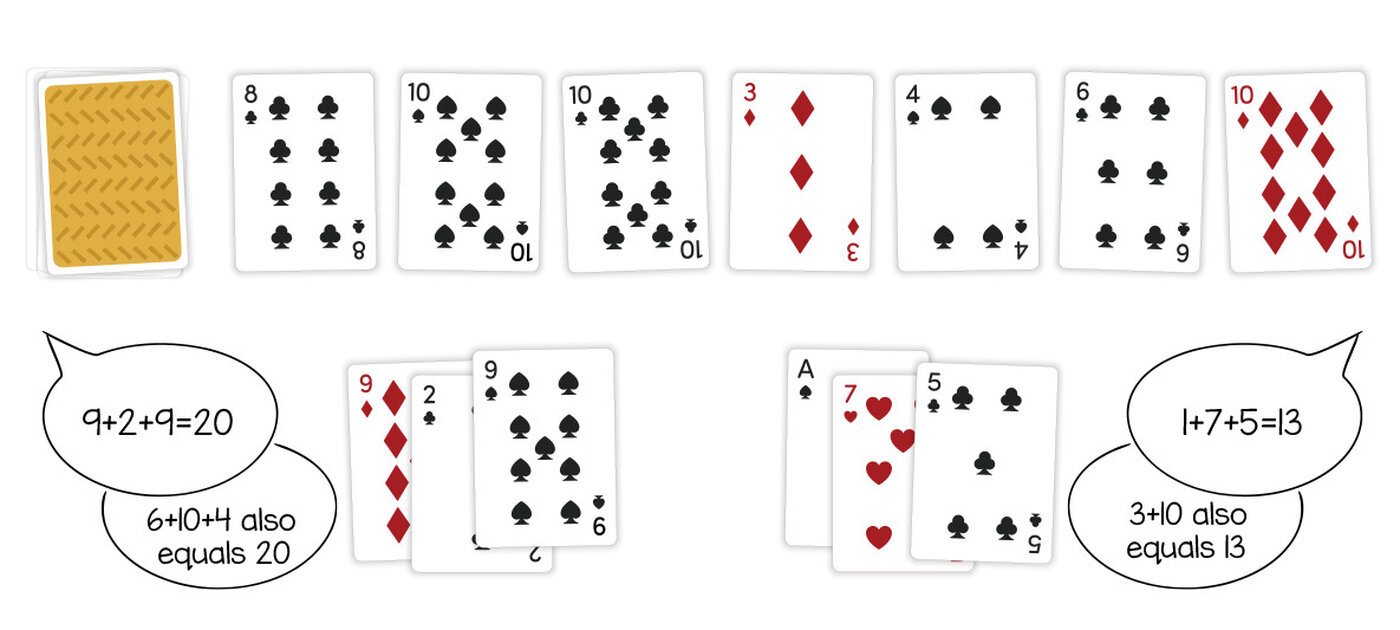
Materials
deck of cards (face cards removed), aces = 1
Directions
- Before play, take turns drawing 3 cards. Place your 3 cards face up in front of you and find the total sum. This is your own target number for the round. Keep the cards face up in front of you during the game.
- Lay 7 more cards face up in a row in the center of the play area. Place the remaining cards in a draw pile, face down.
- Decide who will go first, then take turns.
- On your turn, take any single cards and combinations of cards from the row of 7 that equal your own target number.
- When you are unable to remove any more cards from the row of 7, replace the cards you took with cards from the draw pile so there are 7 cards for the next player.
- Take turns until the cards are gone. The player with the most cards is the winner!
Grades 6–12 Math Activities
Secondary students still benefit from hands-on and strategy-based math activities, even as content becomes more advanced. Older students often need engaging, low-pressure ways to strengthen fluency and confidence while working with increasingly abstract ideas.
Useful activities include:
- Integer games
- Ratio and proportional reasoning tasks
- Algebra warm-ups
- Collaborative problem-solving tasks
- Error analysis activities
Older students do not outgrow the need for visual models, discussion, and meaningful practice. They need activities that respect their age while helping them build understanding and confidence.
Battleship Pairs Game
Battleship Pairs is designed for two players and reinforces the learning target of drawing a coordinate system and locating points on a grid.
Materials
- pencil
- grid paper
- colored pencil for each player
- Clipboards
Directions
- Each player folds a piece of grid paper in half and draws two coordinate grids: one for the opponent and one for their own ships.
- Both grids are labeled on the x- and y-axes from -5 to 5.
- Players secretly place 5 ships on their bottom grid:
- 1 ship covering 2 consecutive ordered pairs
- 1 ship covering 3 consecutive ordered pairs
- 2 ships covering 4 consecutive ordered pairs
- 1 ship covering 6 consecutive ordered pairs
- Players take turns calling out ordered pairs.
- A guessed coordinate is marked as a hit or miss.
- The first player to sink all of the opponent’s ships wins.
How to Use Math Activities in Real Classrooms
One of the greatest strengths of effective math activities is their flexibility. Teachers do not need to redesign their entire day to incorporate meaningful practice.
Math activities can be used:
- As warm-ups to activate prior knowledge
- During centers for independent or collaborative practice
- In intervention groups to target specific learning needs
- As enrichment opportunities
- As take-home activities for families
When activities are practical, adaptable, and easy to implement, teachers are more likely to use them consistently—and students benefit from regular, meaningful practice.
Common Mistakes When Using Math Activities
Even well-intentioned math activities can fall short when:
- Games focus more on winning than mathematics.
- Activities emphasize speed over understanding.
- Students are not asked to explain strategies.
- Tasks lack a clear mathematical objective.
- Activities are disconnected from ongoing instruction.
Building Confidence Through Math Activities
Confidence in math comes from understanding that math makes sense and knowing there is often more than one way to solve a problem.
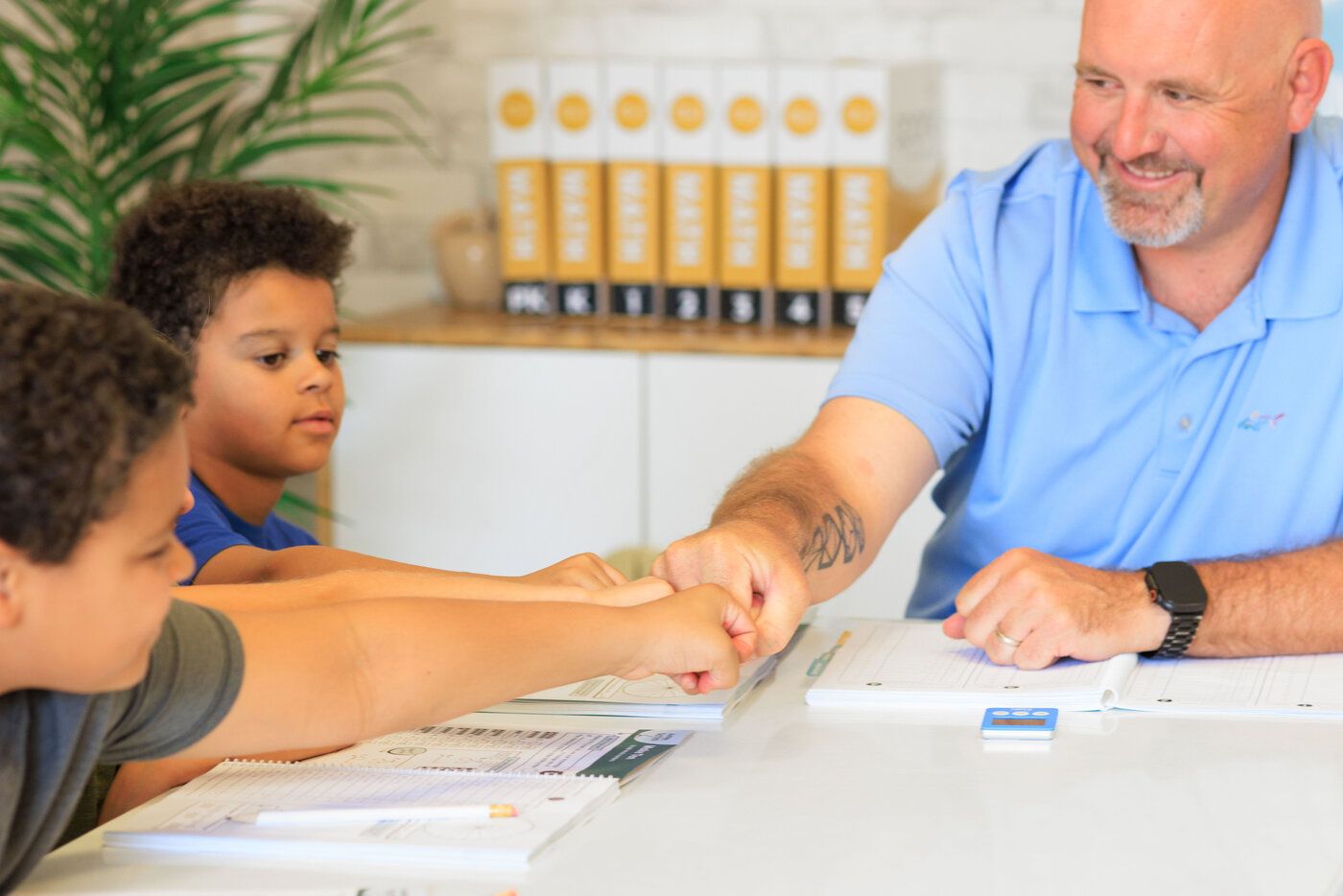
When students use hands-on tools, discuss strategies, and experience success in low-stakes environments, they begin to see themselves as capable mathematicians. Students who feel ownership of their thinking are more willing to participate, persist through challenges, and try again when mistakes occur.
This is especially important for students who have experienced frustration with mathematics. Well-designed activities can create positive entry points, reduce anxiety, and help students rebuild confidence.
The 5-Part Math Activity Evaluation Checklist
Before choosing an activity, ask:
- What mathematical goal does it support?
- Does it encourage reasoning?
- Can students use multiple strategies?
- Does it promote discussion?
- Can all learners access the task?
Final Thoughts
The best math activities for grades K–12 are not just entertaining. They are intentional tools that build fluency, confidence, and flexible thinking at the same time.
They help students understand how numbers and operations work, choose strategies with purpose, and grow into stronger, more independent problem-solvers. Whether students are learning to count, compare fractions, work with decimals, or solve algebraic problems, meaningful math activities make learning more engaging and more effective.
When practice is hands-on, strategy-driven, and built around real understanding, students don’t just get better at math they start to see themselves as capable mathematicians.
Frequently Asked Questions
The best math activities combine engagement with clear mathematical purpose. Games, visual models, discussion tasks, problem-solving challenges, and hands-on activities can all be effective when they support understanding and strategy use.
Math activities improve fluency by giving students repeated opportunities to practice skills in meaningful ways. Instead of focusing only on speed, strong activities help students build accuracy, efficiency, flexibility, and the ability to explain their thinking.
Yes. Hands-on math activities are valuable well beyond elementary school. Secondary students often benefit from visual models, games, real-world problem solving, and collaborative tasks that make abstract ideas easier to understand and discuss.
Short, consistent practice is often more effective than occasional long sessions. Many classrooms benefit from daily or near-daily fluency routines that take only a few minutes but give students regular opportunities to strengthen understanding and strategy use.
Teachers should look for math activities that are standards-aligned, easy to implement, adaptable for different learners, and focused on reasoning rather than rote completion. Strong activities also encourage discussion, strategy use, and meaningful engagement.
Yes. Clear, low-prep math activities can be very effective at home. When families have access to simple, easy-to-follow activities with familiar language and tools, students can reinforce classroom learning, build confidence, and stay connected to math beyond the school day.